

Why Handoffs Matter in Pharmaceutical Transport
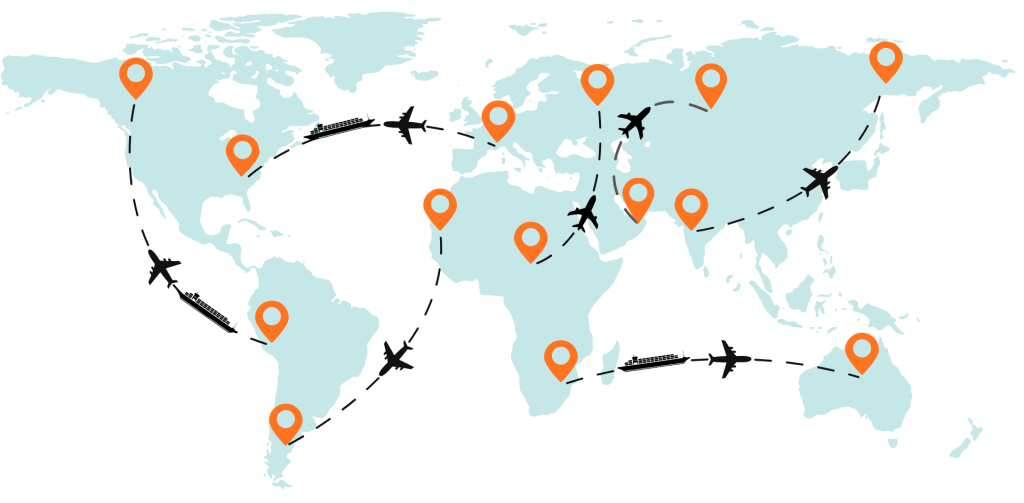
Pharmaceutical shipments do not always travel from origin to destination using a single transport method. Depending on the product, route, urgency and delivery requirements, a shipment may move by air, sea and road as part of one coordinated logistics operation.
This is known as multi-modal pharmaceutical transport.
For example, a temperature-sensitive medicine manufactured in Europe may travel by air to Dubai, move through airport cargo handling and customs clearance, and then be transported by a temperature-controlled vehicle to a pharmaceutical warehouse or healthcare facility.
Another shipment may arrive by sea at Jebel Ali Port before being transferred to a suitable warehouse and distributed by road across the UAE or to another GCC destination.
Each transfer introduces a critical question: How can pharmaceutical product quality, temperature conditions, documentation and accountability be maintained when responsibility moves between transport providers?
For pharmaceutical importers and distributors in the UAE, managing these handoffs is essential to building a dependable supply chain. A delay, temperature excursion or missing transfer record can affect product quality, delivery timelines and regulatory compliance.
This guide explains how multi-modal pharmaceutical transport works, the risks associated with air, sea and road transfers, and the practical controls businesses can use to maintain continuity throughout the shipment journey.
What Is Multi-Modal Pharmaceutical Transport?
Multi-modal pharmaceutical transport is the movement of medicines and healthcare products using two or more transport modes, such as air, sea and road, within one coordinated shipment plan.
It allows pharmaceutical businesses to combine the speed of air freight, the capacity of sea freight and the flexibility of road transportation.
A typical UAE pharmaceutical shipment might follow one of these routes:
- Air-to-road: Medicines arrive at Dubai International Airport and move by road to a pharmaceutical warehouse or hospital.
- Sea-to-road: Pharmaceutical cargo arrives at Jebel Ali Port and is transported to a licensed storage facility or distribution centre.
- Sea-to-air-to-road: A shipment uses sea freight for part of its international journey, air freight for a time-sensitive onward movement and road transportation for final delivery.
- Air-to-road-to-road: Cargo arrives by air, transfers to a local vehicle and then moves through a regional road network to its final destination.
The exact route depends on product requirements, transit time, destination, cost and available infrastructure.
Multi-modal transport should not be confused with simply booking different carriers. The important element is coordination: each transport stage must connect to the next without compromising product conditions or losing shipment visibility.
Why Pharmaceutical Shipments Use Air, Sea and Road Transport
Each transport mode offers different operational advantages. Pharmaceutical businesses select a combination based on the characteristics of the product and the supply chain.
Air Freight: Speed and Time-Sensitive Shipments
Air freight is often suitable for:
- Urgent medicine replenishment.
- High-value pharmaceutical products.
- Temperature-sensitive shipments with strict transit requirements.
- Clinical trial materials and specialised healthcare products, subject to applicable requirements.
- Smaller shipments where delivery speed is important.
However, air transport involves airport handling, security procedures, cargo terminal transfers and potential waiting periods. These stages must be included in the temperature and handling plan.
Sea Freight: Capacity and Larger Shipments
Sea freight may be appropriate for:
- Larger commercial pharmaceutical consignments.
- Products with suitable validated packaging and transport conditions.
- Planned inventory replenishment.
- Shipments where transit time allows a longer journey.
Sea transport can involve longer transit periods and exposure to changing environmental conditions. Container suitability, temperature control, monitoring and contingency arrangements should therefore be assessed before dispatch.
Road Freight: Flexible Regional and Final-Mile Delivery
Road transport connects ports, airports, warehouses, distributors and healthcare facilities.
It is particularly useful for:
- Airport-to-warehouse transfers.
- Port-to-warehouse movements.
- Domestic pharmaceutical distribution.
- UAE-to-GCC regional transportation, where permitted.
- Final delivery to hospitals, pharmacies and medical facilities.
Road transportation provides flexibility, but traffic, vehicle availability, border procedures and delivery appointments can affect transit time.
What Are the Main Risks During Multi-Modal Pharmaceutical Handoffs?
The most vulnerable points in a multi-modal shipment are often the transitions between transport modes.
A shipment may be handled by an airline, ground-handling company, customs broker, freight forwarder, warehouse operator and road carrier. If the transfer arrangements are not clearly defined, gaps can appear.
1. Temperature Excursions During Transfers
A temperature excursion occurs when a product is exposed to conditions outside its specified temperature range.
Potential exposure points include:
- Airport cargo terminals.
- Seaport handling areas.
- Customs inspection locations.
- Vehicle loading and unloading.
- Transfers between storage facilities.
- Waiting areas during carrier changes.
For example, a refrigerated pharmaceutical shipment may arrive at an airport in suitable condition but experience an extended wait during transfer to a road vehicle.
The product’s temperature requirements may be maintained through qualified packaging, suitable handling environments and appropriate monitoring. The specific controls must be based on the product’s labelled storage conditions and validated transport arrangements.
2. Documentation Gaps Between Carriers
Every transport stage generates information. If documents are not transferred correctly, the next operator may lack the details needed to handle the cargo safely.
Common problems include:
- Different shipment references across documents.
- Incorrect consignee or delivery details.
- Missing handover acknowledgements.
- Incomplete temperature records.
- Unclear batch or quantity information.
- Missing permits or supporting documents.
A consistent shipment reference and central document record help maintain continuity across carriers.
3. Unclear Responsibility at Handover Points
When a shipment changes hands, responsibility for its condition and handling must be clear.
For example, if cargo is delayed between airport release and vehicle collection, the parties should know:
- Who is responsible for monitoring the cargo?
- Who must report a delay or temperature alarm?
- Who authorises corrective action?
- Who documents the transfer?
- Who informs the shipper and consignee?
These responsibilities should be agreed before the shipment moves.
4. Packaging Damage During Repeated Handling
Multi-modal shipments may be loaded, unloaded, transferred and repositioned several times.
Repeated handling can increase the risk of:
- Damaged cartons or pallets.
- Broken seals.
- Compromised insulated packaging.
- Incorrect stacking.
- Loss of shipment labels.
- Physical damage to the product.
Packaging should be suitable for the complete transport route, including anticipated handling events and environmental exposure.
5. Delays During Customs and Carrier Coordination
Customs inspections, incomplete documentation, port congestion and missed transport connections can disrupt the planned journey.
A missed connection may increase the time a shipment remains at a terminal or temporary storage location.
A practical transport plan should include realistic transfer windows, confirmed collection arrangements and contingency options.
How to Manage Handoffs Between Air, Road and Sea
A reliable multi-modal pharmaceutical operation needs a consistent process at every transfer point.
The following framework helps importers and logistics providers manage the most important handoff controls.
1. Establish Documentation Continuity
Documentation should follow the shipment from origin to final delivery.
Each party involved in the movement should have access to the information needed for its specific responsibilities.
Depending on the route and product, the document set may include:
- Commercial invoice.
- Packing list.
- Air Waybill or Bill of Lading.
- Road consignment note, where applicable.
- Customs declaration and release documentation.
- Applicable pharmaceutical import permits and approvals.
- Product and quality documentation, where required.
- Temperature records and monitoring reports.
- Handover and proof-of-delivery records.
The documents should be checked for consistency, especially shipment references, consignee details, quantities and product descriptions.
Best practice: Maintain one controlled shipment record that connects the air, sea and road transport documents. This makes it easier to investigate delays, discrepancies and quality incidents.
2. Maintain Temperature Continuity Across Every Mode
Cold chain continuity means maintaining the product’s required temperature conditions throughout transportation, handling and storage.
It should not be treated as an air-freight requirement alone. Temperature risks can occur during every transfer.
A practical temperature-control plan should consider:
Before dispatch
- Confirm the product’s approved temperature range.
- Select packaging suitable for the complete route.
- Assess expected transit time and possible delays.
- Define monitoring and alarm arrangements.
During transport
- Use appropriate temperature-controlled equipment and packaging.
- Monitor conditions according to the approved shipment plan.
- Minimise unnecessary waiting and exposure.
- Record relevant handling and transfer events.
At handover
- Confirm the receiving party is ready to accept the shipment.
- Review available temperature information.
- Record the transfer time and condition.
- Escalate alarms or suspected excursions.
At final delivery
- Check the shipment condition.
- Review temperature records where required.
- Complete receiving documentation.
- Refer any suspected deviation to the responsible quality team.
A data logger can provide useful temperature information across multiple transport stages, provided it is correctly configured, suitable for the monitoring purpose and managed throughout the journey.
3. Define Responsibility at Every Transfer Point
A shipment may involve several service providers, but accountability should never be unclear.
Before dispatch, define who is responsible for:
- Cargo collection.
- Terminal handling coordination.
- Customs documentation and clearance activities.
- Temperature monitoring.
- Storage and transfer arrangements.
- Vehicle allocation.
- Handover confirmation.
- Incident reporting.
- Final delivery and proof of delivery.
A single logistics coordinator can help oversee the overall movement, even when different carriers and specialist service providers perform individual stages.
Service-level agreements (SLAs) should clarify responsibilities, communication timelines, escalation contacts and the process for managing deviations.
4. Use Packaging Validated for the Complete Route
Pharmaceutical packaging must be suitable for the expected transport conditions, not simply the first leg of the journey.
For multi-modal shipments, consider:
- Expected transit duration.
- Temperature range required by the product.
- External environmental conditions.
- Number of handling and transfer events.
- Potential customs inspection delays.
- Container or vehicle loading arrangements.
- Protection against physical damage.
For example, packaging qualified for a short air journey may not automatically be suitable for a longer sea-and-road route.
Packaging selection and qualification should be based on the product’s requirements, route profile and applicable quality procedures.
Clear handling labels can also help communicate instructions to warehouse teams, carriers and receiving personnel.
5. Build a Practical Contingency Plan
A multi-modal shipment should have a response plan for situations where the original route cannot be followed.
Possible disruptions include:
- Flight cancellations.
- Vessel delays.
- Port congestion.
- Customs holds.
- Vehicle breakdowns.
- Missed transfer connections.
- Temperature-monitoring alarms.
- Unexpected changes in delivery appointments.
A contingency plan should identify:
- Alternative carriers or transport routes, where available.
- Suitable authorised storage options.
- Emergency communication contacts.
- Procedures for temperature deviations.
- Customer and consignee notification responsibilities.
- Approval requirements before changing the planned route.
- Documentation required to record the disruption and corrective action.
An alternative route should not be activated automatically if it changes the validated transport conditions or regulatory requirements. The responsible quality and compliance teams should assess the proposed change.
A Practical Multi-Modal Pharmaceutical Handover Process
The following example shows how a pharmaceutical shipment arriving in Dubai by air can move to a UAE warehouse and then to a healthcare customer.
| Stage | Responsible party or function | Key handover controls |
|---|---|---|
| International air transport | Airline and freight forwarder | Shipment documents, handling instructions and monitoring plan |
| Airport arrival | Ground handler and cargo terminal | Arrival confirmation, cargo condition and terminal handling |
| Customs clearance | Importer and customs broker | Declaration, permits and cargo release |
| Airport collection | Road carrier | Collection acknowledgement and temperature arrangements |
| Warehouse receiving | Authorised warehouse operator | Quantity, batch, packaging and temperature checks |
| Final distribution | Road carrier or distribution partner | Delivery scheduling and transport monitoring |
| Customer delivery | Receiving facility | Condition check, acknowledgement and proof of delivery |
The responsibilities shown are illustrative. Actual responsibility depends on the service contract, applicable regulations and the parties involved.
The key principle is that each transfer must have a clear receiving party, documented acceptance and an agreed process for reporting exceptions.
UAE-Specific Considerations for Multi-Modal Pharmaceutical Logistics
The UAE’s combination of international airports, seaports, road networks and logistics zones supports different pharmaceutical transport routes.
However, businesses must distinguish between general cargo movement and the regulatory requirements that apply to pharmaceutical products.
Pharmaceutical Import Approvals
The Emirates Drug Establishment (EDE) provides regulatory services relating to medical products, including specified import authorisations.
Importers should confirm the relevant product registration, import permit and shipment-clearance requirements before dispatch.
Controlled and semi-controlled medicines may require additional approvals and stricter procedures. Requirements should be checked against the product classification and applicable authority guidance.
Customs Documentation
For shipments entering Dubai, customs declarations require supporting documents according to the relevant import procedure.
Dubai Customs identifies documents such as commercial invoices, packing lists, Certificates of Origin and permits from relevant restriction entities among the documentation that may apply.
The transport mode also determines the relevant transport document, such as an Air Waybill or Bill of Lading.
GDP and Good Distribution Practice
Good Distribution Practice (GDP) provides a framework for maintaining pharmaceutical product quality throughout storage and distribution.
Relevant controls may include:
- Suitable storage and transportation conditions.
- Temperature monitoring and documented records.
- Appropriate handling procedures.
- Traceability and stock control.
- Deviation reporting and investigation.
- Risk management and corrective actions.
The applicable UAE requirements should be confirmed for the product and activity concerned. International GDP guidance can also provide useful technical context, but it should not be treated as a substitute for local regulatory requirements.
Free Zones and Storage Options
Facilities in locations such as Jebel Ali and Dubai’s airport-linked logistics zones can support cargo transfers and regional distribution.
However, a free zone or bonded facility is not automatically authorised for every pharmaceutical storage or distribution activity.
Before selecting a facility, confirm its applicable licences, permitted activities, storage capabilities and customs status.
Practical Checklist for Multi-Modal Pharmaceutical Transport
Use this checklist before dispatching a pharmaceutical shipment involving more than one transport mode.
| Area | What to confirm | Operational purpose |
|---|---|---|
| Route planning | Air, sea and road connections confirmed | Avoid missed transfers |
| Documentation | Consistent shipment and product details | Traceability and clearance |
| Temperature | Required range and monitoring plan established | Product integrity |
| Packaging | Suitable for the full route and expected delays | Protection during handling |
| Responsibility | Carrier roles and handover points documented | Accountability |
| Storage | Suitable and authorised facilities confirmed | Controlled holding |
| Communication | Escalation contacts and reporting timelines agreed | Faster issue resolution |
| Contingency | Alternative routes and response procedures assessed | Supply chain resilience |
| Final delivery | Receiving appointment and POD process confirmed | Complete shipment records |
How to Measure Multi-Modal Pharmaceutical Transport Performance
A shipment can arrive on time and still have experienced poor handling or incomplete documentation.
For this reason, pharmaceutical importers should assess performance across the entire journey rather than relying on delivery time alone.
Useful performance indicators include:
1. On-time handover rate: Percentage of transfers completed within the agreed time window.
2. Temperature excursion rate: Number of shipments or transport legs with recorded temperature deviations.
3. Documentation accuracy: Percentage of shipments with complete and consistent documents.
4. Customs clearance lead time: Time between declaration submission and cargo release.
5. Handover record completion: Percentage of transfers supported by the required acknowledgement and records.
6. Exception resolution time: Time taken to report, investigate and close shipment disruptions.
7. On-time final delivery: Percentage of shipments delivered within the agreed receiving window.
Tracking these indicators helps businesses identify weak points and improve coordination between carriers, warehouses and delivery partners.
How Arib Shipping Supports Multi-Modal Pharmaceutical Logistics
For pharmaceutical importers and distributors, coordinating air, sea and road transport requires visibility across the complete shipment journey.
Arib Shipping supports healthcare and pharmaceutical cargo movement through logistics coordination designed around shipment requirements, transport connections and final delivery needs.
Effective multi-modal coordination involves more than arranging separate transport legs. It requires a clear understanding of the handover points, documentation requirements, cargo handling arrangements and delivery schedule.
When planning a pharmaceutical shipment, businesses should discuss:
- Origin and destination locations.
- Product type and handling requirements.
- Required temperature conditions.
- Preferred transport mode and route.
- Applicable permits and shipment documentation.
- Storage or transfer requirements.
- Final delivery location and timeline.
Arib Shipping works with customers to understand these requirements and coordinate the logistics arrangements needed for dependable healthcare cargo movement.
Planning a pharmaceutical shipment involving air, sea or road transport?
Contact Arib Shipping to discuss your route, handling requirements and delivery plan.
Frequently Asked Questions About Multi-Modal Pharmaceutical Transport
1. What is multi-modal pharmaceutical transport?
Multi-modal pharmaceutical transport is the movement of medicines and healthcare products using two or more transport modes, such as air, sea and road. It requires coordinated handling, documentation, temperature controls and clear responsibility across each transport stage.
2. How do you manage handoffs between air and road pharmaceutical transport?
Air-to-road handoffs should be planned before the shipment arrives. Confirm cargo release, vehicle availability, handling instructions, temperature-monitoring arrangements and the receiving party. Record the transfer time, shipment condition and relevant documentation at collection.
3. How is cold chain continuity maintained in multi-modal shipments?
Cold chain continuity is maintained through suitable packaging, temperature-controlled handling and transportation, monitoring devices, documented handovers and procedures for responding to temperature deviations. The controls must match the product’s approved storage requirements and validated route conditions.
4. What are the main risks in multi-modal pharmaceutical logistics?
Common risks include temperature excursions, documentation gaps, unclear carrier responsibility, packaging damage, missed connections, customs delays and unsuitable temporary storage. Advance planning and documented handover procedures help manage these risks.
5. Is multi-modal pharmaceutical transport suitable for temperature-sensitive medicines?
Yes, where the complete route can maintain the product’s required conditions. Packaging, transport equipment, handling arrangements and monitoring must be suitable for the expected journey, including transfer periods and possible delays.
6. What documents are needed for multi-modal pharmaceutical shipments in the UAE?
Depending on the product and route, documents may include a commercial invoice, packing list, Certificate of Origin, Air Waybill or Bill of Lading, customs declaration, applicable pharmaceutical permits and product quality documentation. Road transport may also require relevant consignment documentation.
7. Who is responsible for pharmaceutical cargo during a handoff?
Responsibility depends on the service contract and applicable arrangements between the shipper, freight forwarder, carrier, ground handler, customs broker and receiving facility. The parties should define when custody transfers, what checks are required and who reports deviations.
8. Can pharmaceutical cargo move through UAE free zones during a multi-modal shipment?
Yes, where the relevant customs procedures, facility permissions and pharmaceutical requirements are satisfied. Businesses should verify that the chosen facility is authorised and suitable for the specific storage or handling activity.
9. Is a single logistics provider required for multi-modal pharmaceutical transport?
Not necessarily. Different carriers and specialist providers may handle different transport legs. However, the overall operation needs clear coordination, consistent shipment records and defined responsibility at every transfer point.
10. How should a pharmaceutical company prepare for transport delays?
Companies should identify alternative routes, suitable storage options, escalation contacts and temperature-deviation procedures before dispatch. Any route or storage change should be assessed against the product’s approved conditions and applicable regulatory requirements.
Conclusion: Make Every Handover Count
Multi-modal pharmaceutical transport gives businesses the flexibility to combine air, sea and road networks to move medicines across international and regional supply chains.
But the success of a multi-modal shipment depends on what happens between the transport legs.
Temperature continuity, documentation accuracy, clear responsibility, suitable packaging and contingency planning must be maintained from origin to final delivery.
For UAE importers, a structured handover process helps reduce avoidable delays, improve shipment visibility and protect pharmaceutical product integrity throughout the journey.
Every transfer matters. Every handover should be documented. Every transport leg should support the same product-quality requirements.
To discuss your pharmaceutical transport requirements, contact Arib Shipping.
Official References and Further Reading
The following resources provide regulatory and technical information relevant to pharmaceutical imports, cargo movement and distribution practices:
- Emirates Drug Establishment (EDE) – UAE medical-product regulatory services and import authorisations.
- UAE Ministry of Health and Prevention (MOHAP) – UAE health-sector regulatory information and services.
- Dubai Customs – Customs declarations, import procedures and supporting documentation.
- International Air Transport Association (IATA) – Air cargo and temperature-sensitive healthcare shipment guidance.
- European Commission – Guidelines on Good Distribution Practice – Technical reference for pharmaceutical distribution quality systems.
Regulatory requirements vary by product, route, shipment purpose and activity. This article is general information and should not replace confirmation from the relevant UAE authorities or qualified regulatory and quality professionals.














Leave a Reply